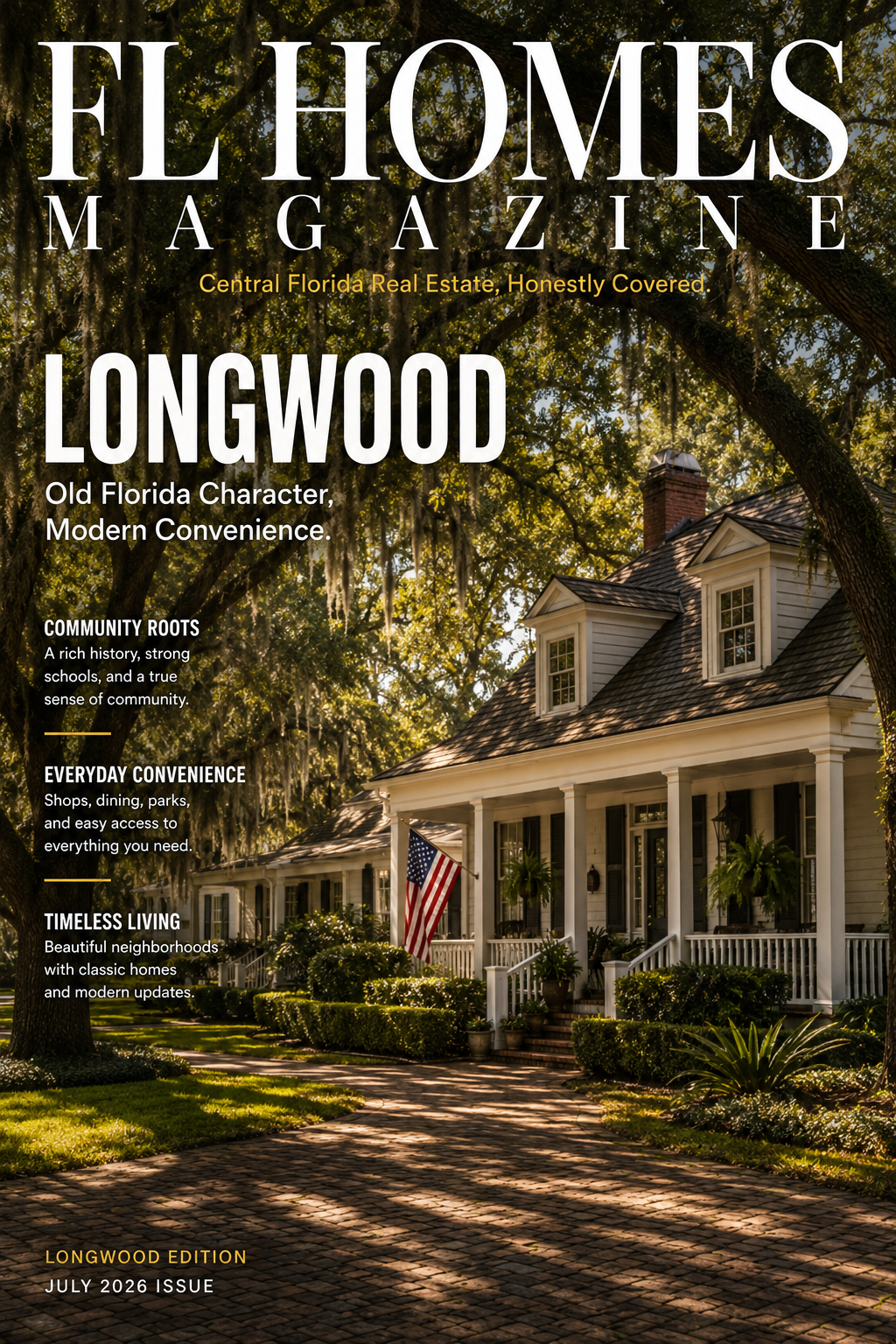
Longwood is where Central Florida's oak-canopy, old-Florida character survives right alongside modern convenience. Its historic district is one of the best-preserved in Seminole County, and the residential streets branching off from it, mature trees, established lots, real front porches, feel a generation removed from the newer subdivisions popping up elsewhere in the region. For buyers tired of touring identical new-construction floor plans, Longwood offers something genuinely different, a city that grew up rather than simply grew.
A City That Kept Its Character
Longwood's historic district dates back to the 1870s, when the city was platted around the newly arrived South Florida Railroad. That railroad heritage is still visible today in the district's layout and in several preserved buildings that now house local shops and community gathering spots. Unlike cities that grew so fast their history got paved over, Longwood held onto its scale, narrow streets, mature oaks, and a genuine sense of having been built at a human pace rather than a developer's pace.
That historic core sets the tone for the rest of the city. Even neighborhoods built decades after the original historic district tend to share the same emphasis on mature landscaping and larger lots, a distinctly different feel from the tighter, newer subdivisions found elsewhere in Seminole County.
Neighborhoods to Know
Longwood's residential neighborhoods generally fall into two categories: established communities built from the 1960s through the 1980s, with larger lots, mature oak canopy, and a real mix of architectural styles, and the smaller pockets of newer construction that have filled in over the past two decades closer to the 434 corridor. The established neighborhoods tend to reward buyers willing to update a kitchen or bathroom in exchange for a lot size and tree canopy that simply isn't available in newer developments.
Areas closer to Sanlando Park and the historic district carry a premium for walkability and proximity to Longwood's community events, while neighborhoods further from the core offer more house for the money at the cost of a slightly longer walk to downtown amenities.
What sets Longwood apart from a lot of Central Florida markets is how consistent the lot sizes stay across price points, even relatively modest homes here tend to sit on more land than a comparably priced home in a newer subdivision elsewhere in Seminole County. For buyers who value outdoor space, a garden, room for a pool, simply somewhere for kids or pets to run, that consistency is worth factoring into any comparison against neighboring cities.
Getting Around
The 434 corridor is Longwood's main commercial spine, connecting the city to Altamonte Springs to the south and Winter Springs to the east, and it's where most day-to-day shopping and dining happens. Interstate 4 sits within easy reach for anyone commuting toward Orlando or Sanford, and Longwood's own SunRail station gives residents a car-free option for that same commute, a genuine convenience given how much I-4 traffic can back up during peak hours. For a city this residential in character, that level of transit access is genuinely uncommon.
Life in Longwood
Longwood's historic district hosts community events and small local shops that give the city a genuine sense of place you can't manufacture in a newer development. Sanlando Park anchors outdoor life with sports fields, a splash pad, and shaded walking trails that stay busy with families year-round. The 434 corridor puts shopping and dining within easy reach without sacrificing the quieter, residential feel most Longwood buyers are looking for in the first place.
Compared to some of its faster-growing neighbors, Longwood moves at a noticeably calmer pace, which is exactly the draw for buyers who've spent time in busier parts of Central Florida and are ready for something more settled.
A Day in the Life
A weekend in Longwood tends to move slowly, in the best possible sense. Mornings might start with coffee on a front porch shaded by decades-old oaks, followed by a walk through the historic district where a local shop owner still remembers your name from your last visit. Sanlando Park fills up by early afternoon with families at the splash pad or a pickup game on one of the sports fields, and the shaded trails stay busy well into the evening as the Florida heat backs off.
During the week, that same resident has the 434 corridor and easy I-4 access for anything they can't find locally, plus a SunRail station if the commute runs toward Orlando. It's a city that lets you slow down at home without cutting you off from anything Central Florida has to offer.
The Real Estate Market
Longwood's housing stock leans toward established neighborhoods with mature landscaping and larger lots than you'll typically find in newer Seminole County developments. That character comes with real trade-offs buyers should know upfront: older homes may need kitchen, bathroom, or systems updates that a newer subdivision home wouldn't. But for buyers who value space, trees, and a settled neighborhood over brand-new finishes, Longwood is genuinely hard to beat.
Because so much of Longwood's inventory is older construction, sellers benefit from working with an agent who understands how to price and market a home's character and lot size alongside any needed updates, rather than trying to compete directly with newer construction on finishes alone.
Who Longwood Is For
Longwood suits buyers who want established neighborhoods and mature lots, anyone drawn to genuine historic character rather than a manufactured version of it, and families looking for a quieter alternative to Central Florida's newer, denser developments. It's also a strong option for buyers who plan to renovate or update a home over time rather than wanting everything finished on day one.
Buyers who want to move into a fully updated, brand-new home without any renovation work should weigh Longwood carefully against Oviedo or newer pockets of Lake Mary, where inventory skews significantly newer. Longwood rewards patience and a willingness to see potential in an older home, and that's simply not the right fit for every buyer.
What to Expect When You Tour
Touring in Longwood often means walking through homes with genuine mid-century bones, solid construction, real wood details, layouts that don't always match modern open-concept expectations. Buyers coming from newer subdivisions sometimes need a mental adjustment: a smaller kitchen or a more segmented floor plan isn't a flaw here, it's simply the era the home was built in, and many of these layouts can be opened up with the right renovation.
It's also worth touring at different times of day if a specific street's tree canopy and shade pattern matters to you, since Longwood's mature landscaping genuinely changes how a home feels between morning and late afternoon light. That's a detail a listing photo will never fully capture.
Buying or Selling in Longwood
To see what's currently available across Longwood's established neighborhoods and newer pockets alike, search active Longwood listings through MLS. If you own an older home in Longwood and are wondering what updates would actually move the needle on value before you sell, get a free home valuation from CertainlySold and a straight answer on what's worth doing and what isn't.
Planning renovations as part of your purchase, or need financing that accounts for a fixer-upper's potential? Smart-N-Loans can walk you through options built for exactly that situation. And if you're also considering a downsizing move as part of this search, ElderPlacement is worth a conversation. Longwood pairs naturally with a look at nearby Altamonte Springs or Lake Mary if you want to compare character against convenience before deciding.
“Old Florida character survives right alongside modern convenience.”
Longwood proves that a city doesn't have to choose between preserving its history and staying genuinely livable. For buyers willing to trade a few newer finishes for real character, mature trees, and a settled sense of place, it remains one of Seminole County's most underrated options, a city that never chased growth for its own sake and is genuinely better for it. Whether you're drawn here for the historic district, the tree canopy, or simply a quieter pace of life than its faster-growing neighbors, Longwood rewards buyers who take the time to actually get to know it before they decide.
Frequently Asked Questions
What is it like to live in Longwood, FL?
Longwood is a Seminole County city known for its preserved historic district, oak-canopy streets, established neighborhoods with larger lots, and Sanlando Park's recreational amenities.
Is Longwood a good place to buy a home?
Longwood suits buyers who want mature landscaping, larger lots, and historic character over brand-new construction, with the 434 corridor providing convenient nearby shopping and dining.
Do Longwood homes need renovation?
Because much of Longwood's housing stock is established construction, some homes may need kitchen, bathroom, or systems updates, though buyers are often trading that for larger lots and mature landscaping not found in newer developments.
Ready to Explore Longwood?
Search active listings or get a free home valuation from a licensed local broker.