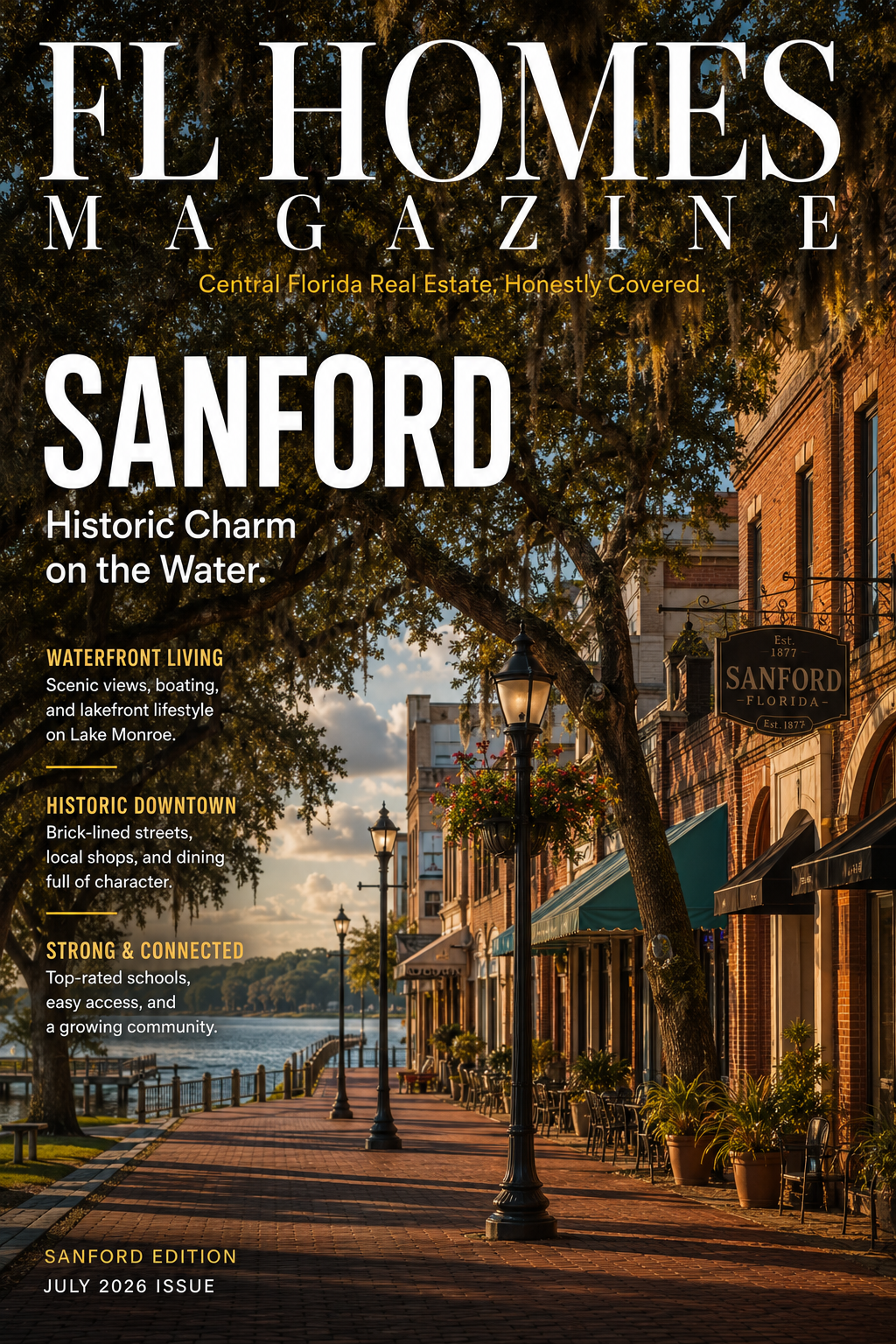
Sanford is the rare Central Florida city that's genuinely walkable, genuinely historic, and genuinely still growing. Its downtown sits directly on Lake Monroe, and the revitalized waterfront, restaurants, a working marina, a Saturday farmers market, and a steady calendar of festivals, has turned Sanford into one of the region's most talked-about places to put down roots. Once known mostly for its role in the citrus and produce trade, Sanford has spent the last decade reinventing itself without losing the architecture that makes it special.
A Waterfront City With Real History
Sanford's downtown historic district dates back to the late 1800s, and unlike a lot of Florida cities that bulldozed their way into the modern era, Sanford largely kept its original brick streets and early-1900s architecture intact. That decision is paying off now: the same buildings that once housed dry goods stores and produce warehouses have been converted into restaurants, breweries, and boutique shops, giving downtown Sanford a genuine sense of place that developers spend fortunes trying to manufacture elsewhere.
Lake Monroe sits right at the edge of downtown, and the Riverwalk that runs along it has become one of the area's most-used public spaces, popular for morning walks, sunset views, and festival crowds throughout the year. It's rare to find a Central Florida downtown this walkable, this historic, and this close to open water all at once.
Neighborhoods to Know
Buyers in Sanford are effectively choosing between two very different products under one city name. Near downtown, historic homes, many dating to the early 1900s, offer genuine architectural detail: original woodwork, high ceilings, wraparound porches, and mature oak canopy that took a century to grow. These homes require a buyer willing to take on some maintenance, but they can't be replicated by new construction at any price.
Further from the water, Sanford spreads into newer subdivisions with more modern layouts, larger lots, and less upkeep, appealing to buyers who want space and predictability over character. Between the two extremes, a range of mid-century neighborhoods offers a middle ground: smaller, well-built homes on established streets, often at a more accessible price point than either the historic core or the newest developments.
Buyers researching Sanford for the first time should plan to actually walk the neighborhoods they're considering rather than relying on listing photos alone, since two homes a few blocks apart, one in the historic core and one in a 1980s infill neighborhood, can feel like entirely different markets despite sharing a mailing address. Working with an agent who knows exactly where those lines fall saves a lot of wasted weekends touring homes that don't match what you actually pictured.
Getting Around
Sanford sits at the northern edge of Seminole County, with Interstate 4 running along its western side and easy access to Highway 17-92 for local trips. The city's SunRail station puts Orlando within a car-free reach for commuters, a genuine advantage for anyone who'd rather avoid I-4 traffic during rush hour. Orlando Sanford International Airport also sits within city limits, a convenience for frequent travelers that most Seminole County cities can't offer.
Life in Sanford
Downtown Sanford is genuinely built for walking, and that's not marketing language, it's a functional reality. Brick streets, restored architecture, and a local restaurant and nightlife scene draw visitors from across Central Florida on weekends, and residents get to enjoy that same energy on a Tuesday night without fighting for parking. The Central Florida Zoo sits just across Lake Monroe, and the city's calendar stays full with festivals, farmers markets, and community events almost year-round.
Outside downtown, Sanford's residential neighborhoods offer a quieter pace, with parks, boat ramps, and access to the St. Johns River system for anyone interested in boating or fishing. The city's mix of historic charm and everyday practicality is part of what keeps drawing new residents even as the market shifts.
A Day in the Life
A Saturday morning in Sanford often starts at the farmers market along the Riverwalk, coffee in hand, browsing local produce and goods with Lake Monroe as the backdrop. From there, it's an easy walk into the historic district for lunch at one of downtown's restaurants housed in a century-old storefront, followed by a slow afternoon exploring the small shops tucked along First Street. As the sun starts to set, the Riverwalk fills back up, this time with people out for an evening walk or watching the light change over the water.
On a weekday, that same resident might catch the SunRail into Orlando for work, skipping I-4 traffic entirely, and be back in time to grab dinner downtown before heading home. It's a rhythm that blends small-town pace with genuine access to everything Central Florida offers, a combination that's harder to find than it sounds.
The Real Estate Market
Sanford's dual identity, historic core and newer periphery, means the market genuinely serves different buyers rather than pushing everyone toward the same product. Historic homes near downtown tend to draw buyers specifically seeking character and walkability, and well-maintained examples in that category can move quickly given how limited that inventory is by definition; there's only so much genuinely historic housing stock to go around. Newer subdivisions further out compete more on space, price, and modern systems, and tend to follow broader Seminole County market trends more closely.
For sellers, understanding which category a home falls into matters enormously for pricing and marketing. A historic home marketed like a standard suburban listing will undersell its actual appeal, while a newer subdivision home doesn't benefit from historic-district framing it doesn't have.
Who Sanford Is For
Sanford suits buyers who want walkability and character near downtown, first-time buyers looking for value in a mid-century neighborhood, commuters who want a car-free option via SunRail, and anyone drawn to waterfront living without waterfront prices. It's also increasingly popular with buyers downsizing from larger homes elsewhere in Central Florida who want more lifestyle and less square footage to maintain.
Sanford may be less of a fit for buyers who want the most modern, low-maintenance construction available, or families whose top priority is a specific newer school zone, since much of Sanford's most character-rich inventory comes with the trade-offs of older construction. For those buyers, comparing Sanford against Oviedo or Lake Mary before deciding is a reasonable next step.
What to Expect When You Tour
Touring homes in Sanford often means covering more emotional ground than a typical showing. A historic home near downtown might have genuine charm alongside a dated electrical panel or an aging roof, details that don't show up in listing photos but matter enormously to financing and insurance. A good inspection isn't optional here, it's how you separate a home's character from its actual condition, and it's worth budgeting time for a more thorough inspection process than you might expect in a newer subdivision.
On the newer-construction side of the market, touring moves faster and more predictably, closer to what buyers experience anywhere else in Seminole County. Knowing which type of tour you're walking into before you schedule it helps set realistic expectations and keeps the process from feeling like two completely different buying experiences under one city name.
Buying or Selling in Sanford
Ready to see what's currently available across Sanford's historic core and newer neighborhoods? Search active Sanford listings through MLS to compare both markets side by side. If you own a home in Sanford and are curious what it's worth in today's market, particularly if it's a historic property that needs specialized pricing knowledge, get a free home valuation from CertainlySold before you make any decisions.
If downsizing or exploring senior living options is part of your Sanford search, ElderPlacement can help you evaluate what fits your needs and budget. And for financing, particularly if you're eyeing an older home that may need renovation financing built in, Smart-N-Loans can walk you through the options available. Comparing Sanford against nearby Lake Mary or Altamonte Springs is worth doing before you commit, since all three offer genuinely different lifestyles within a short drive of each other.
“A city where a first-time buyer and a downsizing retiree can both find something that fits.”
Sanford isn't trying to be Lake Mary or Oviedo, and that's precisely the point. It's a city that leaned into its own history instead of erasing it, and the payoff is a downtown with genuine character alongside a real estate market flexible enough to serve buyers at nearly every stage of life.
Frequently Asked Questions
What is it like to live in Sanford, FL?
Sanford is a historic, walkable Central Florida city on Lake Monroe, known for its revitalized downtown, waterfront dining, SunRail access, and a mix of historic homes and newer construction.
Is Sanford a good place to buy a home?
Sanford suits buyers who want walkability and character near downtown, or more space in newer subdivisions further out, making it a flexible market for first-time buyers and downsizers alike.
Are homes in downtown Sanford older?
Many homes near downtown Sanford date to the early 1900s and offer genuine architectural detail, while neighborhoods further from the water tend to be newer construction with more modern layouts and less required maintenance.
Ready to Explore Sanford?
Search active listings or get a free home valuation from a licensed local broker.