
Florida Homestead Eligibility and the 2027 Tax Roll
To qualify for Florida’s homestead exemption, you generally need to own a qualifying home and make it your permanent residence as of January 1 of the year you are applying for. The usual application deadline is March 1. Amendment 3 adds another question: when did you become a permanent Florida resident?
Reviewed November 14, 2026. Based on current Florida government guidance. Check with your county for updates and rules for your home.
What is a homestead exemption?
A homestead is generally your qualifying permanent home. The exemption leaves some of its value out of a property-tax calculation. It can lower taxes, but it is not a cash payment. A vacation home or rental home is not automatically a homestead.
What does “non-school exemption” mean?
Your tax bill has different parts. School taxes go to the school district. Non-school taxes are property taxes for other local governments, such as the county, city and certain special districts. This has nothing to do with whether you have children in school.
Ad valorem means “based on value.” These taxes use the home’s taxable value and a tax rate. An exemption lowers the value used in that calculation. Non-ad valorem assessments are separate charges not based on taxable value, such as some garbage or drainage assessments. The larger homestead exemption does not automatically remove those charges.
For example, a home with a $200,000 assessed value and an allowed $150,000 non-school exemption would have $50,000 left for that non-school tax calculation, before any other benefits. School taxes use their own exemption and calculation.
Keep three dates separate
Your permanent-residence date: when Florida became your permanent home. Buying a vacation property is not the same thing.
Your ownership date: when you gained the qualifying ownership interest in the home.
Your first homestead-exemption year: the first tax year for which the county grants you the benefit.
These dates may be different. A person can become a permanent Florida resident while renting and buy later. A person who buys and moves in after January 1 may need to wait until the next tax year to qualify.
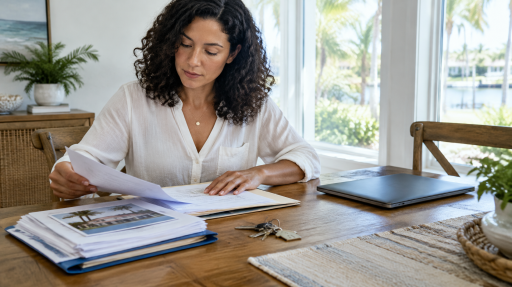
Keep your ownership and residence records together. The county property appraiser decides which documents are needed for your application.
Which Amendment 3 schedule applies?
For eligible homeowners covered by the larger schedule, the non-school exemption is up to $150,000 in 2027 and up to $250,000 in 2028. The school-tax exemption remains up to $25,000.
If you did not have a permanent Florida residence by December 31, 2026, you generally begin with up to $50,000 for non-school taxes once you qualify for homestead. You can become eligible for the larger amount in your fifth year of receiving homestead exemption. The school exemption is up to $25,000. Ask the county to confirm your dates and which rules apply.
An example of counting the five years
Imagine someone first moves to Florida and buys a permanent home in spring 2027. The person generally looks to January 1, 2028 for the next eligibility date. If 2028 becomes the first homestead-exemption year and the person stays eligible, the count looks like this:
Homestead-exemption year | Calendar year |
|---|---|
First | 2028 |
Second | 2029 |
Third | 2030 |
Fourth | 2031 |
Fifth | 2032 |
The larger exemption could begin in 2032 under this example, using the amount and rules that apply then. This is not a promise of approval. A future local exception may also affect the result. The county must review the actual facts.
What should I have ready?
Your deed or other ownership records.
Documents showing where you permanently live. The county may ask about a Florida driver license, voter registration, work or other residence records. No single document settles every case.
Information about any homestead or similar benefit you claimed elsewhere.
Records from a previous Florida homestead if you are asking about portability.
Ask your own county for its current checklist. Trusts, shared ownership, dependent family members and other special situations may need extra review. A general checklist does not guarantee eligibility.
What should existing homeowners ask?
If you already receive homestead exemption, ask whether the county needs an added form or proof for Amendment 3. Do not assume you must reapply, and do not assume no action is needed. Florida’s implementation guidance is still developing. Keep a record of the county’s answer.
Common filing questions
Do seniors automatically get the larger exemption?
No. Being older does not replace the ownership, residence or other eligibility rules. Separate senior exemptions may have age, income and local requirements.
What is portability?
It may let you move part of an existing Save Our Homes assessment benefit from one Florida homestead to another. You still need to apply for homestead on the new home and request the transfer. It does not move your old tax bill to the new house.
What if I missed March 1?
Contact the county property appraiser right away about any late-filing options and deadlines. Do not wait for next year without asking.
Can I qualify just by spending the winter here?
Not necessarily. Seasonal visits are different from making Florida your permanent residence. Ask the county to review your circumstances before claiming an exemption.
Related resources
Amendment 3 master guide · 55-plus housing education · Second home versus permanent-home planning
Official sources
Florida Department of Revenue: how property taxes and separate assessments work
Keep learning about Florida homeownership
Explore FL Homes Magazine’s 55-plus living resources and the related magazine articles above for more Florida housing education.
This article gives general information, not personal tax or legal advice. Ask your county property appraiser about your home and application. Consult a qualified tax professional or attorney before making decisions based on your situation.
Trusted Resources
Explore our related companies. These businesses share ownership and provide separate services.
Certainly Sold — Central Florida real estate brokerage.
Smart-N-Loans — Mortgage and housing-cost education.
Elder Placement Agency — Senior housing and placement guidance.
Agency AI Lab — Business marketing and automation resources.
FL Homes Magazine — Florida housing and homeowner education.


